Water-wise landscaping has changed how people design gardens in the United States. True Lines Landscape Design is an expert in creating beautiful xeriscaping. These gardens use less water but still look great. Drought-resistant gardens are now a smart choice for outdoor spaces.
To design a drought-resistant garden, you need a plan and to know your local climate. By using water-wise landscaping, you can use less water and save on garden care. This approach works well with nature.
In this guide, we’ll show you how to create a drought-resistant garden. You’ll learn how to make your outdoor space beautiful and water-efficient. It’s all about making your garden thrive with little water.
Key Takeaways
- Xeriscaping reduces water consumption by up to 60%
- Drought-resistant gardens require less maintenance
- Native plants are crucial for successful water-wise landscaping
- Strategic garden design can lower utility costs
- Sustainable landscaping supports local ecosystem health
Understanding Drought-Resistant Landscaping Basics
Turning your garden into a water-efficient space starts with learning about low-maintenance gardening. Drought-resistant landscaping is not just a trend. It’s a way to make beautiful outdoor areas that need little water.
What is Xeriscaping?
Xeriscaping is a method for saving water in gardens. It aims to create stunning gardens that use very little water. The main ideas are:
- Choosing plants that fit your local climate
- Improving soil to hold water better
- Using less grass
- Choosing smart ways to water
Benefits of Water-Wise Gardens
Water-wise gardens have many benefits. They use less water, save money, and are tough against bad weather.
- Lower water bills
- Less upkeep needed
- Good for the environment
- Increases your home’s value
Climate Considerations for Your Region
Starting a drought-resistant garden begins with knowing your local weather. Native plants are great because they fit right in. Look at your yard’s soil, sun, and water systems to make a garden that lasts.
How to Design a Drought-Resistant Garden
Creating a water-wise garden needs careful planning. It starts with knowing your outdoor space well. This means understanding its unique features.
First, do a yard evaluation. This step is key. You need to look at a few important things:
- Sunlight exposure throughout the day
- Soil composition and drainage patterns
- Existing water collection or dry zones
- Microclimate variations in your landscape
When designing a drought-resistant garden, zoning is key. Split your garden into areas based on water needs:
- High-water zones: Near living spaces or areas requiring more moisture
- Moderate-water zones: Transitional spaces with mixed plant requirements
- Low-water zones: Peripheral areas with drought-tolerant vegetation
Choosing the right plants is crucial. Pick native plants that do well in your area. They use less water and look great.
Your garden should use water wisely. It should be beautiful and save resources. This way, your garden is both sustainable and lovely.
Essential Elements of Water-Wise Garden Design
Creating a sustainable garden needs careful planning and smart water use. Water-wise design is more than just landscaping. It’s about being efficient and keeping your garden beautiful.
Smart gardeners know that saving water starts with good design and new techniques. The right design can cut down water use and make your garden flourish.
Efficient Irrigation Systems
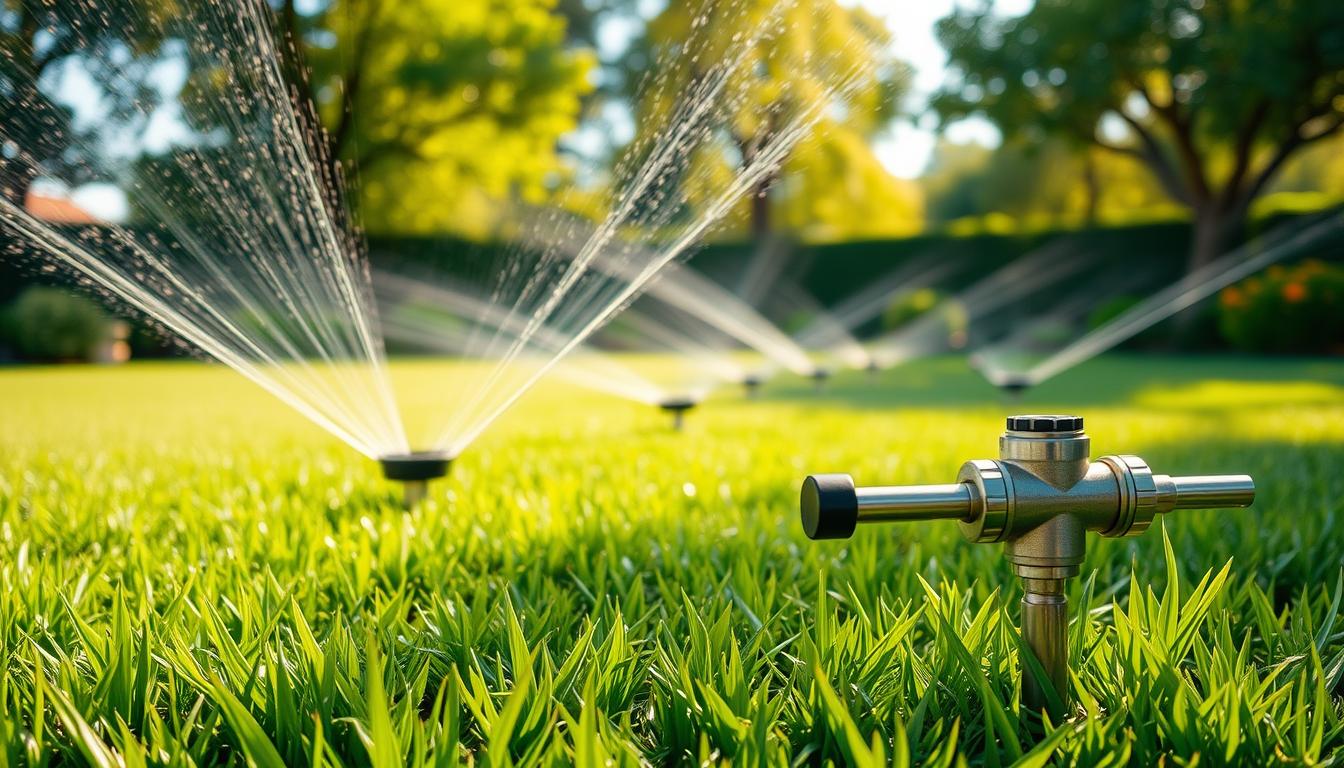
Drip irrigation is a big win for water-saving gardeners. It waters plants right at the roots, cutting down on waste and boosting absorption.
- Targets plant roots specifically
- Reduces water evaporation
- Prevents water runoff
- Promotes healthier plant growth
Proper Plant Grouping Strategies
Hydrozoning is key for water-efficient gardens. It groups plants by their water needs. This makes watering more efficient and cuts down on waste.
Hardscaping and Permeable Surfaces
Using permeable surfaces like gravel and stone helps with water runoff. These features let rainwater soak into the ground, supporting natural water cycles.
Mulching is also vital for saving water. A good layer of mulch can significantly reduce soil moisture evaporation. This keeps plants hydrated longer and cuts down on watering.
Rainwater harvesting is the final piece of water-wise garden design. It collects rainwater for future use. Simple systems can be a reliable water source when it’s dry.
Best Drought-Tolerant Plants for Your Garden
Starting a water-wise garden means picking the right plants. Native plants are great for those wanting a sustainable, beautiful garden that uses less water.
Here are some top picks for different garden styles:
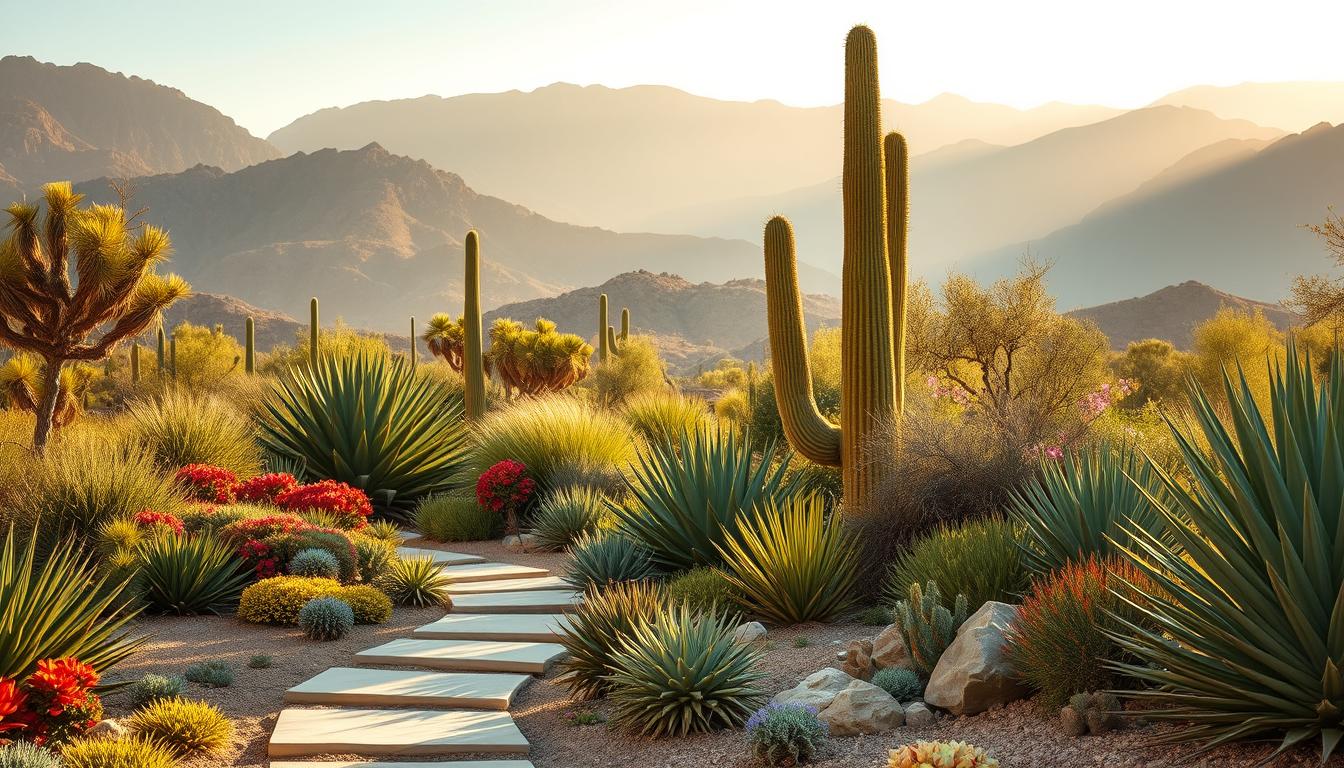
- Succulents and Cacti: These plants store water well. They’re perfect for dry areas and add interesting texture.
- Lavender: It’s a fragrant native plant that draws pollinators and needs little water.
- Black-Eyed Susan: This colorful perennial can handle dry spells.
- Sage: It comes in many varieties, all beautiful and drought-resistant.
Native plants are a big win for gardeners who care about water. They fit right into local climates, needing less water and care. Plants like yarrow, agave, and ornamental grasses make beautiful gardens while saving water.
When planning your garden, group plants by their water needs. This method, called hydrozoning, saves water and ensures each plant gets the right care. Think about your climate and soil when picking plants for a healthy, water-saving garden.
- Recommended regions for native drought-tolerant plants:
- Southwest: Agave, Ocotillo, Palo Verde
- California: Manzanita, California Poppy
- Southwest: Yucca, Desert Marigold
By choosing drought-tolerant native plants wisely, you can make a garden that’s both beautiful and water-friendly. It will also help local ecosystems thrive.
Water Conservation Techniques and Maintenance
To make a garden that lasts through droughts, you need smart water use. Using the right water-saving methods lets you keep your garden looking great. It also helps save water and other resources.
Starting with water-saving tips is key. These methods help keep your garden healthy and cut down on water loss.
Mulching Methods
Mulching is vital for keeping water in the soil and plants healthy. Organic mulch around plants helps:
- Keep soil moisture in
- Stop weeds from growing
- Control soil temperature
- Feed the soil
Rainwater Harvesting Systems
Rainwater harvesting is a green way to water your garden. It turns rain into a useful water source. You can set up:
- Rain barrels tied to downspouts
- Underground cisterns
- Land shapes to catch rain
Seasonal Maintenance Tips
Keeping a drought-resistant garden means being flexible. Greywater systems help during dry times. Regular pruning and smart plant placement also save water.
Change how you care for your garden with the seasons. Watch how your plants do and adjust when you water based on the weather.
Conclusion
Creating a drought-resistant garden is more than a trend. It’s a choice for sustainable living. With low-maintenance gardening, your outdoor space can become a green oasis. Even when water is scarce, your garden can still flourish.
Water-wise landscaping lets homeowners build gardens that are both lovely and tough. They use less water and help the planet. By choosing native plants and smart irrigation, you can make a big difference.
In the Sacramento area, True Lines Landscape Design is here to assist. We can turn your yard into a beautiful, water-saving space. Call us at (916) 474-1622 to start your journey to a drought-resistant garden.
Your garden can play a key role in saving water. By using water-wise landscaping, you’re helping California’s environment. You’re not just growing plants; you’re making a difference for the future.